 Image 1 of 4
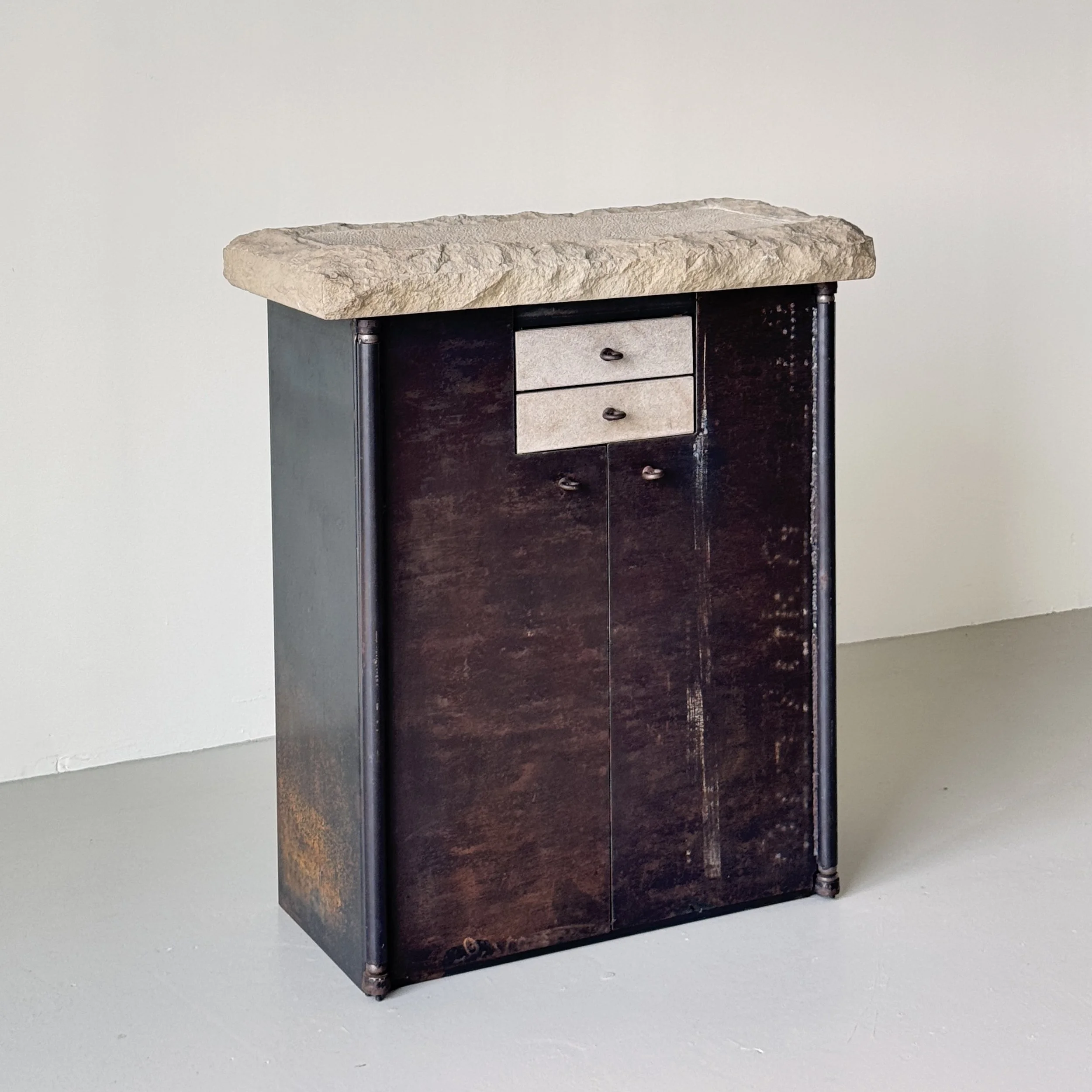 Image 2 of 4
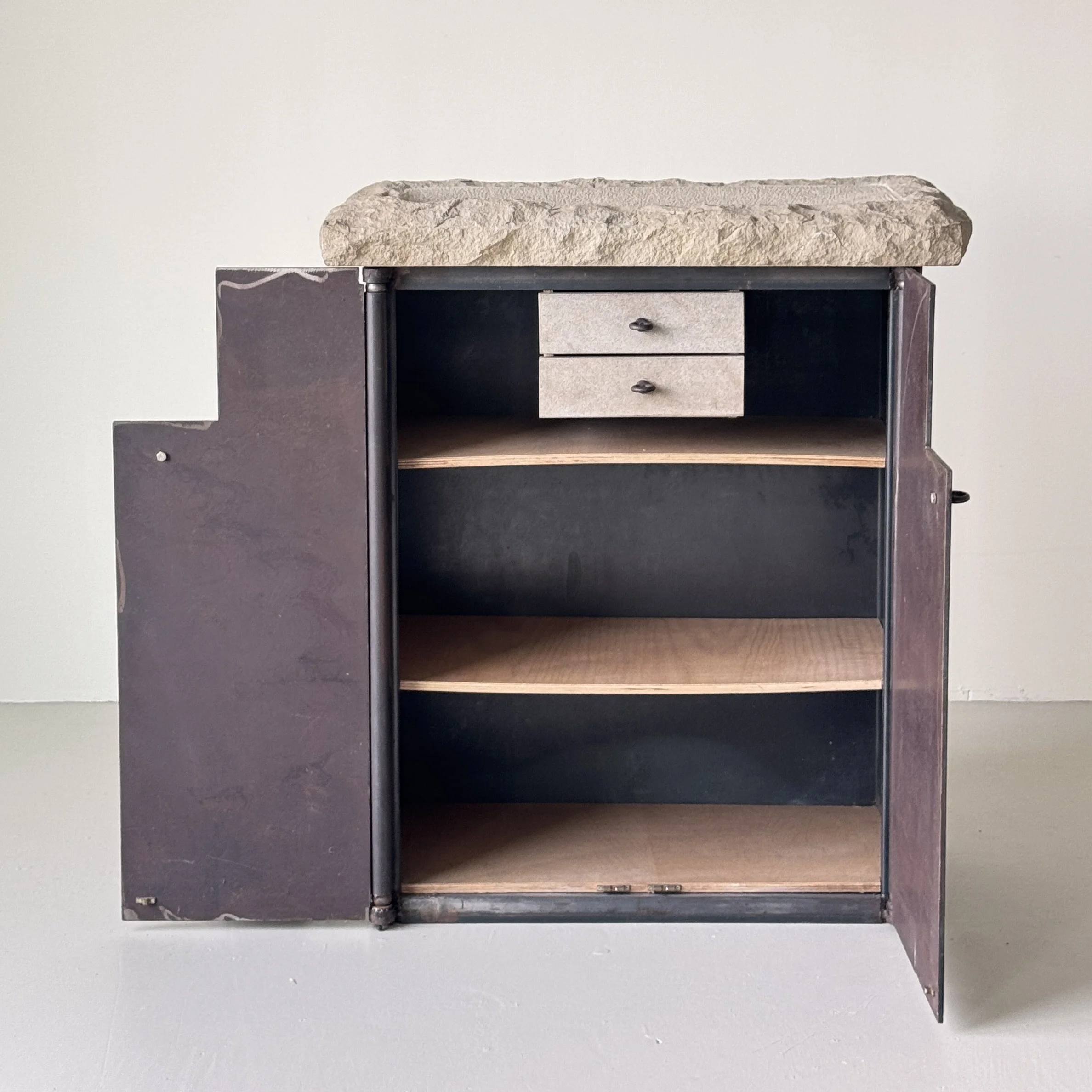 Image 3 of 4
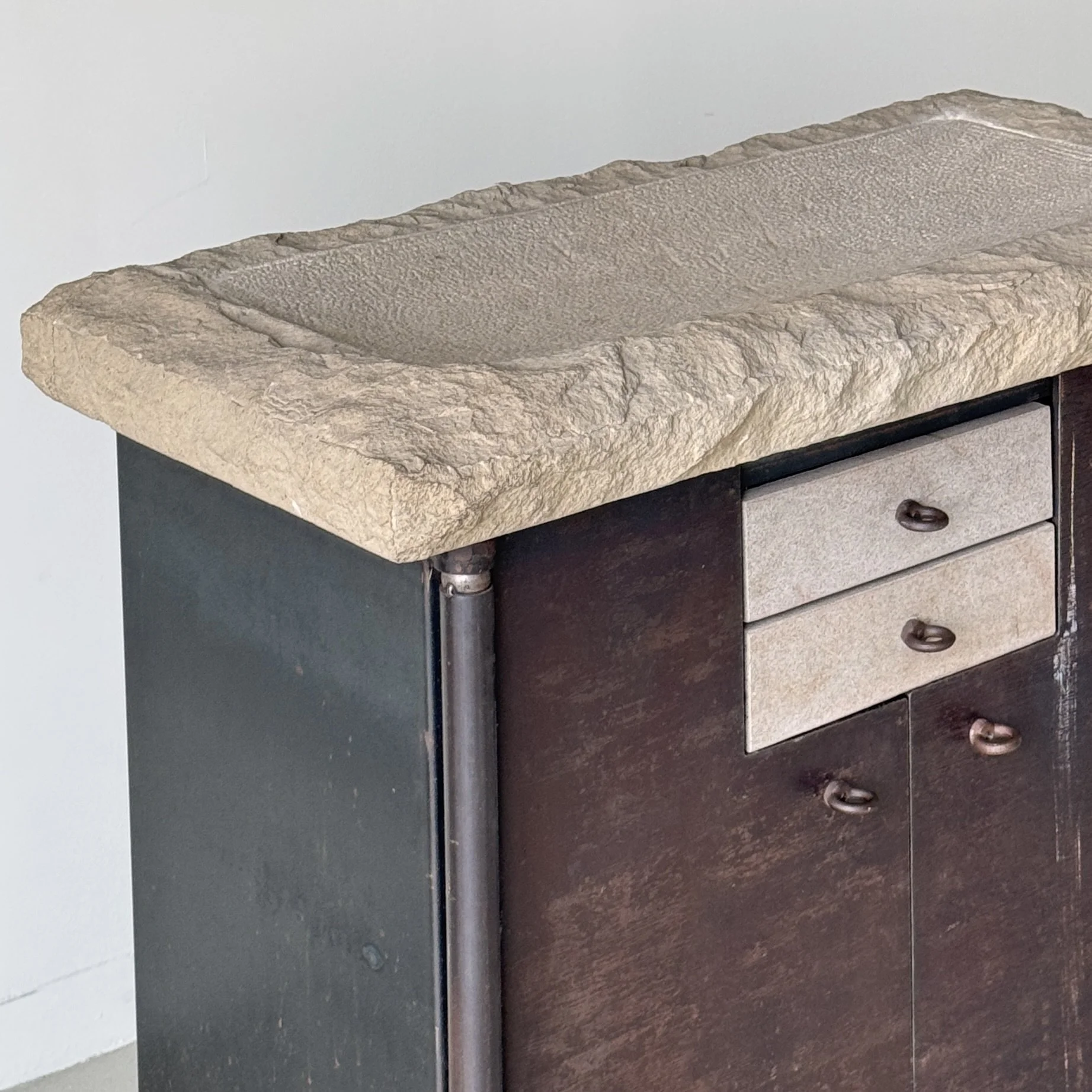 Image 4 of 4
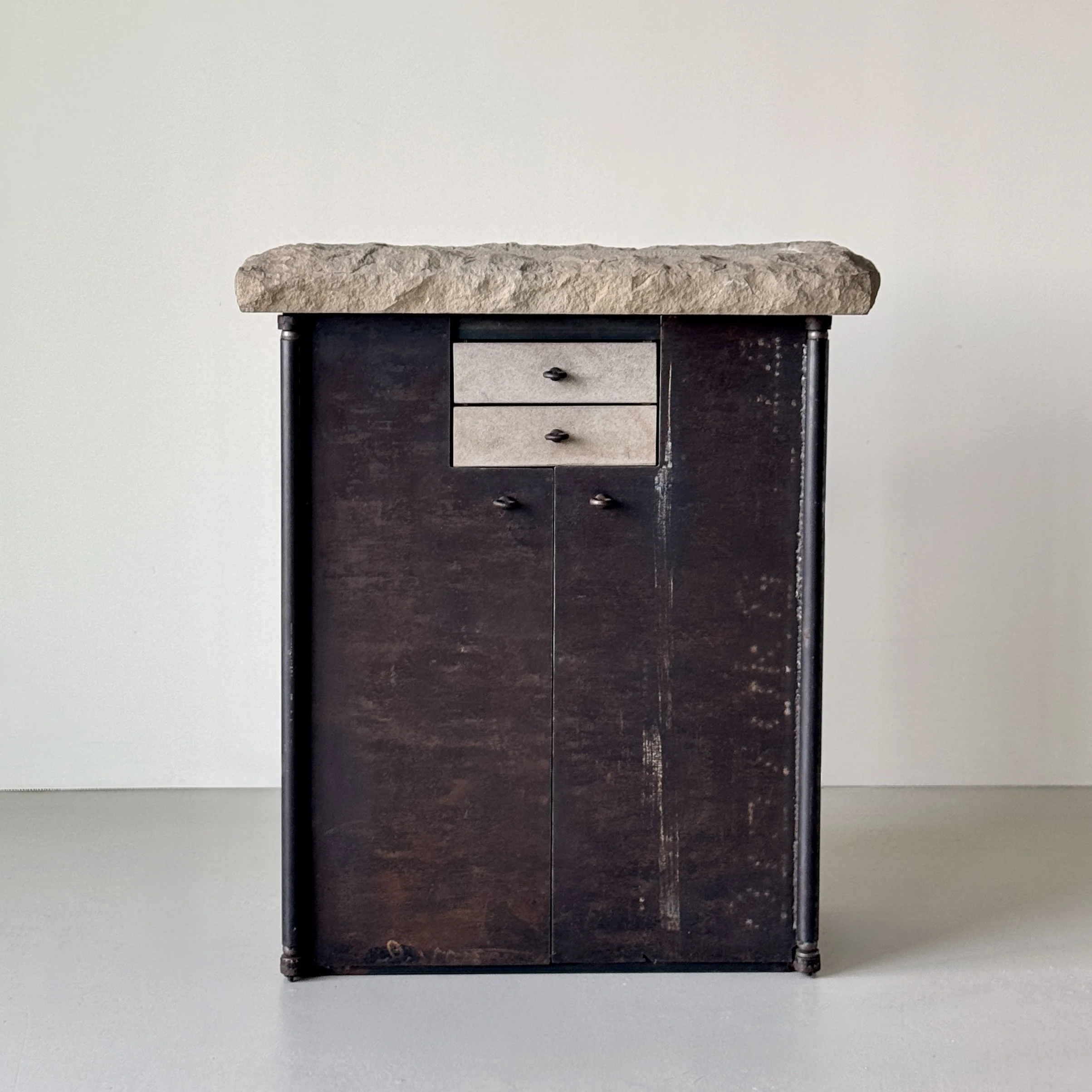
Steel, sandstone, plywood.
43 1/4 x 37 3/4 x 20 in. (110 x 96 x 51 cm)
Produced by Pentagon Design Group, Cologne, Germany.
Provenance:
Private collection, Hennef, Germany, acquired directly from Pentagon Design Group in 1988
Literature:
Uta Brandes et al., Pentagon Informal Design, Cologne, p. 75
Price upon request.
Enquire now
All Case Furniture
Pentagon Group was founded in 1985 by Gerd Arens, Wolfgang Laubersheimer, Reinhard Müller, Ralph Sommer and Meyer Voggenreiter. Having met while studying metal sculpture at the Kölner Fachschule für Kunst and Design, Laubersheimer and Sommer established the company Unikate in 1982. In an effort to expand to include their colleagues Arens, Müller and Voggenreiter, they opened the Pentagon Gallery which was intended as a platform for the five to directly participate in the commercial promotion of their work. From there they evolved into a collective, which is now heavily associated with Neues Deutsche Design (New German Design).
The cabinet is named "Seerose," the German word for water lily, in reference to the possible use of the shallow well of the stone top.
Steel, sandstone, plywood.
43 1/4 x 37 3/4 x 20 in. (110 x 96 x 51 cm)
Produced by Pentagon Design Group, Cologne, Germany.
Provenance:
Private collection, Hennef, Germany, acquired directly from Pentagon Design Group in 1988
Literature:
Uta Brandes et al., Pentagon Informal Design, Cologne, p. 75
Price upon request.
Enquire now
All Case Furniture
Pentagon Group was founded in 1985 by Gerd Arens, Wolfgang Laubersheimer, Reinhard Müller, Ralph Sommer and Meyer Voggenreiter. Having met while studying metal sculpture at the Kölner Fachschule für Kunst and Design, Laubersheimer and Sommer established the company Unikate in 1982. In an effort to expand to include their colleagues Arens, Müller and Voggenreiter, they opened the Pentagon Gallery which was intended as a platform for the five to directly participate in the commercial promotion of their work. From there they evolved into a collective, which is now heavily associated with Neues Deutsche Design (New German Design).
The cabinet is named "Seerose," the German word for water lily, in reference to the possible use of the shallow well of the stone top.